I spent April 12-14 in St Louis working with Dan Berne, the project manager of AgGateway’s PAIL project. Our goal was to make progress on organizing the PAIL project’s materials leading up to presenting an irrigation data exchange draft standard. We put a lot of energy into it and made great progress; there seems to be light at the end of the tunnel!
From the housekeeping, rock-pounding point of view, we focused on stringing multiple pages of materials together so we could have different, individually-editable pages of content (divide and conquer!), strung together in a “master” page where we could read the whole thing and find places where it did not flow right. This was pretty easy to do using the “Include page” macro in the wiki AgGateway uses for collaborative content creation. (Confluence, by Atlassian: a very powerful tool!)
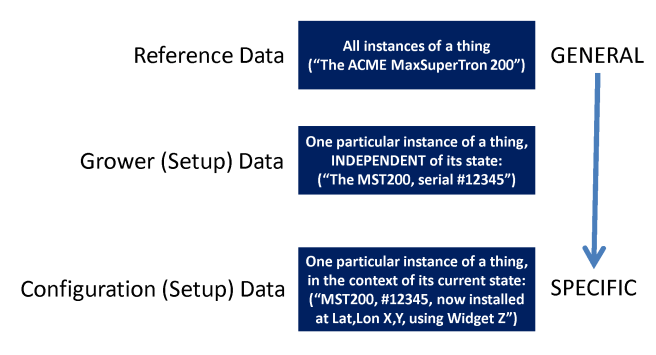
From the point of view of the actual draft standard’s content, we focused on documenting the somewhat-hard-to-grasp concept of Reference Data, and the different kinds of Setup Data, as introduced in the Core Documents flyer the SPADE Communications Team came up with a few weeks ago. Describing different Setup Data use cases is particularly important: if you’re pulling, say, (from an API, for example) a year of data collected from a device under a certain configuration, and the configuration changes halfway, there are multiple ways of messing that up, orphaning data and confusing the user. Many of the field operations data-collection systems currently out there don’t handle this situation very gracefully, so a clear set of implementation guidelines is a valuable asset to the industry.
Below, a first crack at a simple explanation of the difference between Reference and Setup data; I’ll be looking to refine this and make it less wordy.
On another note, it’s interesting just how much work goes into drafting a data exchange standard (starting from figuring out what existing standards you can draw from), and how few people ultimately show up to do the initial dirty work. Standards are critically important for making rational use of resources, but we’re not taught to appreciate their value; it’s increasingly difficult for organizations to allocate the resources necessary to make this happen. Starting right here, right now, in my own little “man in the mirror” sort of way, I think I’ll reach out to the local college to give a few talks on the value of standards in ag technology and try to awaken awareness in some future professionals. #babysteps
 R. Andres Ferreyra